


In today’s uncertain world, converging pressures are testing how leaders make decisions, demonstrate value, and build trust.
Responsible businesses are building credibility from the inside out, grounding purpose in business fundamentals like workforce strategy, innovation governance, long-term value creation, trust, and resilience, rather than relying on reasoning that may no longer resonate across audiences.
Why It Matters: Action Over Advocacy
What’s emerging is not a retreat from purpose, but a recalibration of how it is expressed. Organizations are becoming more deliberate about language and visibility, while intensifying focus on execution. Purpose can no longer live primarily in statements; it must be embedded in how companies govern, invest, innovate, and develop their people.
At the 2026 CECP Board of Boards, CEOs described the current moment using words like uncertain, challenged, unsettled, and frustrated. Yet most also expressed confidence in their ability to meet rising expectations. That duality captures today’s reality: capability paired with constraint, ambition shaped by a sharper risk environment and compounding pressures—from economic and geopolitical volatility to rapid AI adoption and regulatory scrutiny—while still being held accountable by employees, customers, investors, and communities.
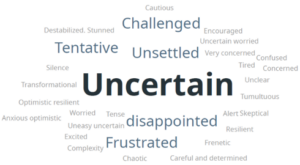
In this context, action has become the most credible expression of purpose. Integrating values into operations, incentives, governance, and workforce strategy is increasingly viewed as more durable than public-facing statements alone. Misalignment between words and actions is quickly exposed, and leaders are under pressure to demonstrate value in ways stakeholders feel.
CECP Pulse Survey data reinforces this shift: nearly half (44%) of responding corporate leaders identified deeper integration of values into incentives and practices—not public statements—as the most effective lever for long-term leadership. Purpose that is embedded into the core of the business is more resilient than purpose expressed primarily through rhetoric.
The Big Picture: Reframing for Impact
Reframing has become a core leadership capability. Rather than stepping away from responsible business commitments, organizations are sharpening how they define and communicate them. Purpose and profit are no longer treated as competing priorities; they are increasingly understood as mutually reinforcing.
Leaders are grounding their efforts in areas that clearly connect to core business strategy and value creation, such as workplace belonging and career mobility, community investments that expand economic opportunity, operational efficiency linked to sustainability, and responsible innovation. In doing so, companies earn permission to operate by ensuring stakeholders feel the value the business provides, particularly those who may not benefit immediately from growth or technological advancement.
This moment rewards clarity over volume and substance over signaling. The challenge is not whether to lead with purpose, but how to do so in ways that endure under scrutiny.
Six Ways to Lead Through Action
Drawing on insights from CECP’s network of more than 200 companies, the following framework offers guidance for leadership teams navigating a constantly evolving business environment. CECP helps companies move from conviction to execution by pairing CEO-only peer insight (like Board of Boards) with benchmarking and practical tools so leaders can pressure-test decisions, align incentives and governance, and measure progress in ways that hold up under scrutiny.
- Live your corporate purpose. Purpose is not a slogan; it is a strategy. CEOs are increasingly treating purpose and profit as inseparable. In a moment where leaders feel uncertain and frustrated yet still responsible for meeting rising expectations, purpose becomes a stabilizing discipline when it guides capital allocation, innovation priorities, and workforce investment, not just messaging. CECP’s 2025 edition of Corporate Purpose: Driving Business Value reported that 93% of investors believe corporate purpose is essential to long‑term business strategy and value creation, and 76% expect companies to clearly define their purpose. When purpose guides decisions and action, whether related to capital allocation, innovation priorities, or workforce investment, it becomes a stabilizing force in periods of uncertainty. This requires making tradeoffs visible, such as how purpose informs capital allocation, incentives, and governance decisions, especially when those choices are harder than issuing statements.
- Evaluate stakeholder impact. This assessment now carries real risk implications. Legal exposure, regulatory scrutiny, and trust erosion are no longer peripheral concerns; they are central to leadership decision making in an environment where misalignment is quickly penalized. CECP Pulse Survey results underscore this shift. In February 2026, more than four in ten respondents cited navigating emerging policy and regulatory changes as a top concern, making governance, clarity, and internal alignment increasingly critical. Before taking a public position or launching an initiative, assess how the issue affects employees, customers, partners, investors, and communities. Stakeholder expectations are often asymmetric. Leaders must determine whether potential backlash represents acceptable risk and whether action will deliver net positive impact. This is especially true as new technologies and regulatory expectations reshape stakeholder trust.
- Act with authenticity and accountability. Credibility is built through execution, not expression. Board of Boards takeaways reinforced that authenticity inside the organization must come before external storytelling, as purpose-driven messaging lands only when it is genuinely felt by employees first, through culture and day-to-day connection to mission. Before making commitments, organizations must assess their track record, close gaps, and ensure governance and incentives reinforce stated values. In an era of skepticism, consistency between values and actions, not visibility, is the foundation of trust. As the Edelman Trust Barometer continues to show, rebuilding trust requires tangible commitments like well‑paid jobs, reskilling, and products and services that meet real needs. Inaction also carries risk. Disengagement can weaken culture, erode employee confidence, and diminish credibility with communities and investors. The organizations navigating this moment most effectively are acting with intention, grounding decisions in purpose, aligning execution across the enterprise, and focusing on shared prosperity in priority areas.
- Measure what matters. Measurement shifts purpose from aspiration to accountability. What is measured, governed, and reported internally increasingly matters and is trusted more than what is communicated externally. Set KPIs that connect business strategy to outcomes for people, communities, and the planet. Use tools like CECP’s Integrated Long-Term Plan Framework to help you communicate to investors, 93% of whom believe corporate purpose is essential to long-term business strategy and value creation, how events in the short term are expected to impact plans in the long term. Use the Employee Engagement Benchmark to gain clarity on how your company is driving purpose at work, opportunities for growth, employee wellbeing, and whether your company has a culture of community involvement. This measurement goes beyond performance and into how innovation and technology are governed and deployed. Transparency around progress reinforces credibility and supports long‑term performance.
- Leverage your unique strengths. The most effective impact comes from focusing where a company has scale, expertise, and proximity. At Board of Boards, CEOs flagged workforce development as a major differentiator with skills-first approaches, career mobility, and investment in entry-level talent treated as business-relevant levers. Organizations that invest in their people, especially those historically left out of opportunity, are seeing stronger retention, trust, and resilience.
- Engage to innovate. As regulatory expectations diverge and scrutiny increases, responsible governance of innovation, particularly AI, has become a risk management imperative as much as a growth strategy. Innovation thrives on diverse perspectives and responsible oversight. As AI and other technologies reshape work and markets, CEOs are increasingly focused not just on adoption, but on governance, ensuring tools deliver value while managing unintended consequences, cybersecurity risk, and regulatory divergence. Human judgment, organizational discipline, and clarity of purpose remain essential to innovation that strengthens trust rather than erodes it.
Together, these are not talking points. They are business strategies that drive stronger employee engagement, brand trust, operational resilience, and long‑term profitability.
Ask yourself:
- Are our actions aligned with our purpose?
- Are we clearly measuring and communicating progress?
- Are we governing innovation responsibly?
- Are we building partnerships that amplify impact and resilience?
We work with companies to translate these questions into action. For purpose alignment, Corporate Purpose: Driving Business Value helps leadership teams and boards connect purpose to long‑term strategy and investor expectations. To measure and communicate progress, CECP benchmarking, alongside Communications Audits and ROI frameworks, provides credible peer context and clarity on what’s working. To support responsible innovation, CECP’s Responsible AI Community of Practice convenes leaders to govern emerging technologies with discipline and foresight. And to amplify impact through partnership, we connect companies across the CECP network to share practical insights and approaches that stand up under scrutiny.
This is the foundation of proactive, purpose‑driven leadership. The path forward is not louder statements, but sustained, strategic action.
Have a story to share? CECP wants to hear how your company is taking action. Reach out and help inspire others.